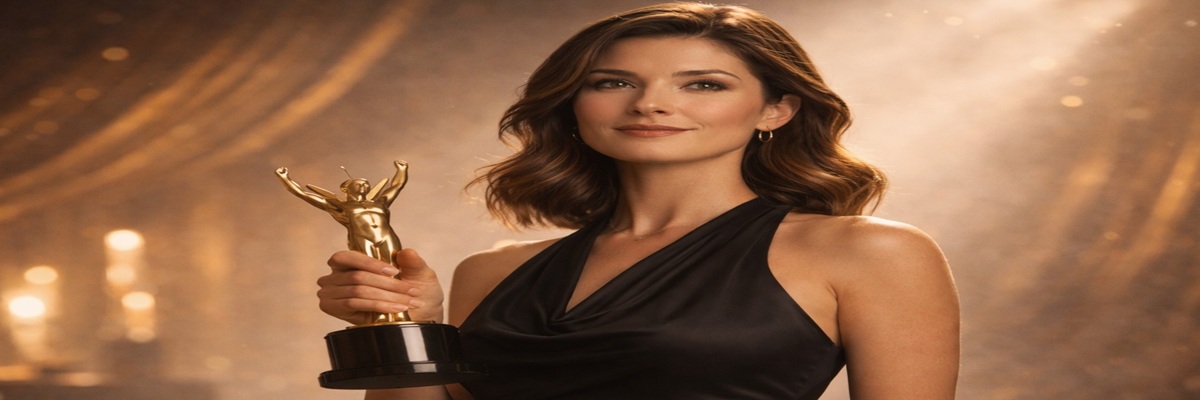
When Jennifer English was announced as the winner of Best Performance at The Game Awards in December 2025 for her role in Clair Obscur, the moment carried weight well beyond a single trophy. The win marked a rare instance where voice performance became one of the most talked-about outcomes of the night, discussed alongside major releases and studio achievements. For many watching, it felt like a turning point in how acting in games is publicly valued.
English’s victory did not arrive quietly. It landed during a ceremony that many viewers and critics described as more focused and confident than in previous years, creating an environment where performance recognition felt earned rather than symbolic.
The Game Awards Moment That Brought Acting to the Forefront
The award was presented during The Game Awards 2025 ceremony, held in Los Angeles and streamed worldwide. The event itself drew attention for feeling more grounded and deliberate, with clearer pacing and stronger emphasis on creative contribution. When English’s name was called, the reaction was immediate across social platforms and industry media.
Coverage following the ceremony highlighted how the Best Performance category stood out in a night often dominated by spectacle. Rather than being treated as a secondary honor, the award was framed as central to the emotional impact of modern games. English’s win became part of a broader conversation about storytelling and the people responsible for bringing it to life.
Several outlets noted that this was a year when the awards felt less like an extended trailer reel and more like a genuine recognition of craft. That context amplified the significance of English’s achievement.
Jennifer English’s Performance in Clair Obscur
At the center of the recognition was English’s work in Clair Obscur, a title that relies heavily on atmosphere, character presence, and emotional delivery. Her performance anchored the experience, guiding players through moments of uncertainty, reflection, and tension without relying on excess dialogue.
What set her work apart was restraint. Rather than leaning on exaggerated delivery, English used pacing and subtle shifts in tone to convey internal conflict. The character’s emotional state was often communicated through pauses and inflection rather than explicit exposition, allowing players to engage more deeply with the narrative.
This approach resonated with critics and players alike. The performance felt lived-in and intentional, supporting the story rather than competing with it. For an awards body increasingly attentive to narrative impact, that distinction mattered.
A Rare Presence Across Multiple Game of the Year Contenders
One of the more unusual aspects of English’s awards season was her presence across several high-profile games recognized during the same cycle. Multiple outlets pointed out that she appeared in more than one title connected to Game of the Year discussions, a situation that remains uncommon even in an industry with recurring talent.
This overlap speaks to trust. Studios return to performers who can deliver consistent, adaptable work under tight production schedules. English’s ability to shift between roles without sounding repetitive has made her a frequent choice for narrative-driven projects.
The coincidence of those appearances converging in the same awards year drew attention to how much influence a single voice actor can have across the medium. It also highlighted how voice talent often operates behind the scenes, shaping multiple experiences without widespread name recognition until moments like this.
Why This Win Matters for Voice Acting in Games
For years, voice acting in games occupied an awkward space. It was essential to storytelling, yet rarely discussed outside specialist circles. Performance categories existed, but they often struggled to command the same attention as technical or visual awards.
English’s win signaled a shift. Media coverage treated the result as news rather than trivia, and discussions focused on why the performance mattered rather than who else might have won. That framing suggests growing awareness that acting is not a supporting element but a structural one in modern game design.
Narrative-heavy games depend on believable performances to sustain immersion. As writing in games has grown more ambitious, the demand on actors has increased accordingly. Recognizing that work at a high-profile event reinforces its importance within the development process.
What the Award Could Mean for Jennifer English’s Career
Winning Best Performance at The Game Awards places English in a different professional position. Within the industry, she was already regarded as reliable and skilled. Public recognition elevates that standing, making her name more visible beyond casting rooms and production credits.
Awards of this scale can influence future opportunities. Studios often look to recognized performers when developing new projects, especially those built around character-driven narratives. While no single win defines a career, it can open doors to roles that require greater creative input or long-term involvement.
For English, the award also reinforces her reputation for versatility. Being associated with multiple acclaimed projects in the same year positions her as a performer capable of carrying emotional weight across varied worlds and tones.
A Broader Shift at Major Game Events
The response to English’s win fits into a larger trend. Events like The Game Awards are gradually reshaping how they present creative roles within game development. By giving performance categories more prominence and context, these ceremonies help audiences understand the collaborative nature of the medium.
This year’s ceremony, in particular, suggested an effort to balance excitement with recognition. Acting, writing, and direction received attention alongside trailers and announcements. That balance created space for moments like English’s win to resonate.
For voice performers, this visibility matters. It affirms that their contributions are not secondary to design or technology but integral to how games are experienced and remembered.
Jennifer English’s Best Performance award did more than honor a single role. It underscored a growing acknowledgment that voices shape games as much as visuals or mechanics. As narrative continues to play a larger role in interactive entertainment, moments like this point toward a future where performance is recognized as central rather than peripheral.