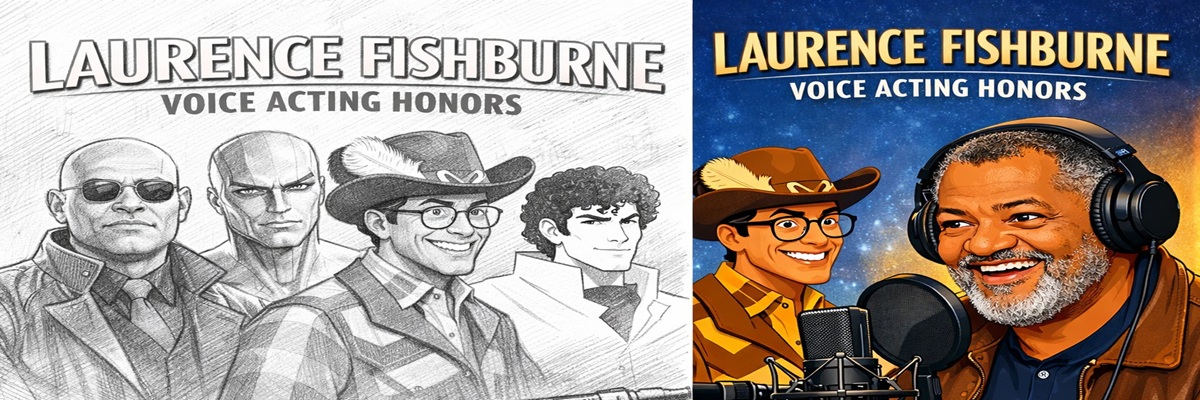
Laurence Fishburne has built a career defined by presence, authority, and unmistakable vocal control. While many audiences know him for his on-screen performances, recent honors have placed renewed attention on another side of his work: voice performance. With major recognition from both the Voice Arts Awards and the James Earl Jones Prize, Fishburne’s contribution to voice acting has stepped into wider public view.
These honors arrive at a time when voice performance is gaining more public recognition as a serious discipline rather than a secondary skill. For a general audience, Fishburne’s awards offer a clear example of how voice work shapes storytelling across film, animation, and narration.
A Prestigious Honor Linked to a Legendary Voice
The James Earl Jones Prize holds particular weight because it carries the name of one of the most influential voices in modern entertainment. James Earl Jones set a standard for vocal authority that crossed stage, screen, and animation, proving that a voice alone could carry character, emotion, and meaning. Receiving an award associated with that legacy places Fishburne in rare company.
This recognition acknowledges more than popularity or name recognition. It reflects sustained excellence in vocal delivery, control, and interpretation. Fishburne’s voice has long carried a sense of gravity that audiences respond to instinctively. Whether narrating, voicing animated characters, or lending depth to dramatic material, his vocal work demonstrates discipline and intention rather than relying on spectacle.
By connecting Fishburne to the James Earl Jones legacy, the prize also reinforces the idea that voice performance deserves the same respect as any other acting discipline. For the public, it reframes voice acting as a craft shaped by training, experience, and artistic choice.
Recognition From the Voice Arts Awards
Fishburne’s recognition at the Voice Arts Awards further reinforces that message. The Voice Arts Awards exist specifically to honor excellence in spoken performance across media, from animation and audiobooks to narration and commercial work. Unlike broader entertainment awards, these honors focus squarely on the voice itself.
For many outside the industry, voice acting often goes unnoticed unless tied to a famous name. Awards like these shift attention toward the work rather than the visibility of the performer. Fishburne’s inclusion highlights how seasoned actors bring depth to voice roles through pacing, tone, and restraint, not just recognizability.
This moment also signals a shift in how voice work is valued. As more high-profile performers receive voice-focused awards, audiences gain a clearer sense of how much vocal performance contributes to storytelling. It encourages listeners to think about who is behind the voice and why certain performances leave a lasting impression.
Why This Moment Matters Beyond One Career
Fishburne’s honors extend beyond personal achievement. They reflect a broader cultural change in how voice performance is perceived. Streaming platforms, animation, audio storytelling, and narrated content continue to grow, placing voices at the center of audience engagement.
For aspiring performers, this recognition sends a clear message: voice acting is not a fallback or side path. It is a demanding craft that rewards skill, consistency, and presence. For audiences, it offers a chance to appreciate the voices that shape characters, guide stories, and create emotional connection without ever appearing on screen.
Laurence Fishburne’s career now stands as a public example of how voice work can carry the same weight and respect as any on-camera role. His recent honors do not close a chapter, but rather underline how powerful a voice can be when treated as a primary instrument of performance.
